New press release live from UNOC: Read here


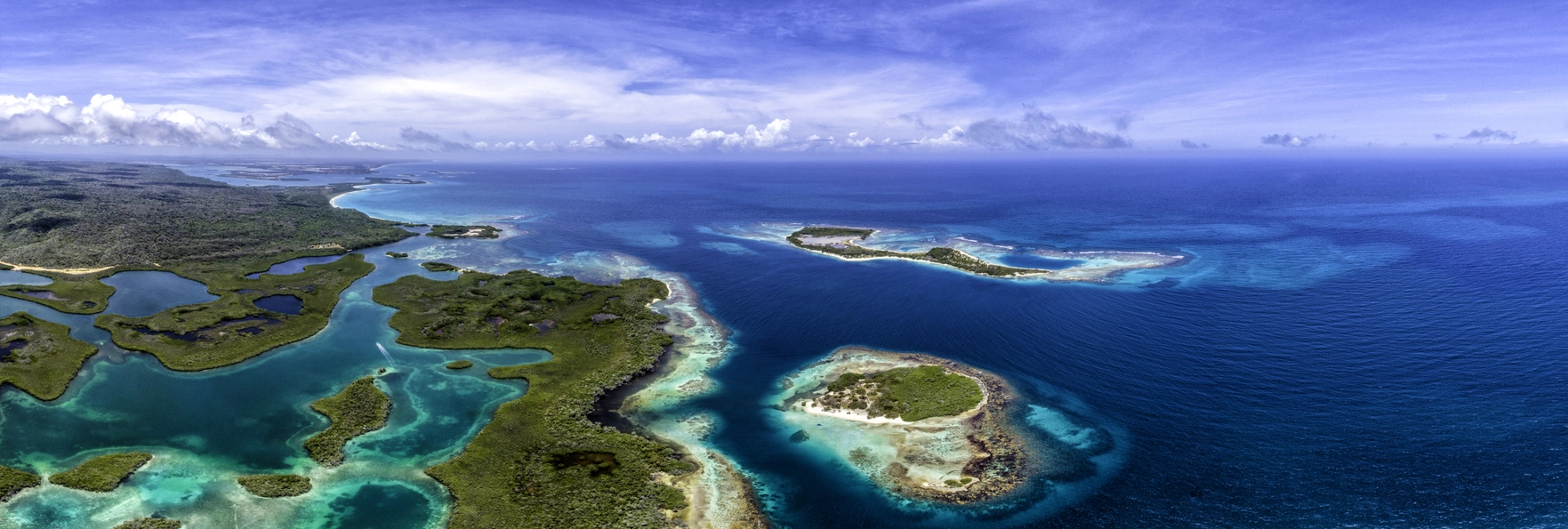
The movement aims to protect and restore 15 million hectares of mangroves by 2030, positioning them as key natural infrastructure in the face of the climate crisis.
The Mangrove Breakthrough is a global initiative emerging at a decisive moment for climate action and biodiversity protection. It was officially launched in 2022, during COP27 in Sharm el-Sheikh, as part of the Ocean Breakthroughs driven by the UN High-Level Climate Champions, with the objective of positioning mangroves as a strategic solution to the climate, environmental, and social crises facing the world's coastal zones. Its inception responds to the urgent need to accelerate the protection of ecosystems that, despite their high environmental and economic value, have been historically underestimated in public and private decision-making.
Recent climate emergencies in Latin America—from severe flooding in Colombia to coastal cyclones in Brazil and extreme storms in Mexico—have directly struck communities, infrastructure, and local economies. This tangible reality demonstrates that the climate crisis is no longer a future scenario, adding a new dimension to the urgency of adaptation. To mitigate risks, protect coastal territories, and safeguard livelihoods, mangroves are an indispensable natural infrastructure to withstand these impacts.
This initiative stems from the scientific and political recognition that mangroves are one of the most valuable and, at the same time, most threatened ecosystems on the planet. Despite occupying a minimal fraction of the Earth's surface, they play a disproportionately massive role in carbon sequestration, coastal protection against storms and flooding, and biodiversity conservation, while sustaining the livelihoods of millions of people. However, as a consequence of human activities, over 50% of assessed mangrove ecosystems are classified as vulnerable, endangered, or critically endangered according to the IUCN Red List of Ecosystems, a globally recognized standard for the health of nature.
"Walking through a mangrove forest in Providencia Island after Hurricane Iota made me realize that this ecosystem sustains much more than biodiversity. Fisheries, storm protection, cultural identity, and the local economy depend directly on its health. It was there that I understood that mangroves are not merely an environmental variable; they are natural infrastructure that underpins human dignity," notes Carlos E. Correa, Global Ambassador of the Mangrove Breakthrough, reflecting on his experience in an island department of Colombia.
In this context, the Mangrove Breakthrough is framed as a global response whose core purpose is to mobilize USD 4 billion, as well as ensure the conservation, restoration, and sustainable financing of at least 15 million hectares of mangroves by 2030, aligning with major international commitments on climate, biodiversity, and sustainable development. The Breakthrough seeks to align with commitments adopted at COP27, alongside global climate adaptation and resilience agendas, to strengthen the resilience of four billion people against climate change by the end of the decade.
More than an isolated initiative, the Mangrove Breakthrough functions as a catalytic platform. It does not operate as a single fund or a traditional implementing organization, but rather as a linking mechanism that connects governments, multilateral organizations, the financial sector, the private sector, philanthropy, coastal infrastructure, local communities, academia, and environmental organizations under a shared strategic framework. This collaborative architecture accelerates action, scales nature-based solutions, and directs resources to where the impact can be greatest.
"When decision-makers understand that a well-conserved mangrove protects roads, ports, and cities, the mindset shift is immediate: they move from viewing it as a liability to recognizing it as a strategic asset," Correa adds, underscoring the importance of transforming the narrative surrounding these ecosystems.
The initiative's geographical scope is global, with a strong emphasis on the countries harboring the world's largest expanses of mangroves. To date, nearly 50 national and subnational governments have officially endorsed the Mangrove Breakthrough, representing approximately 60% of mangroves globally. This voluntary endorsement constitutes a significant political signal: nations recognize the strategic value of mangroves and are integrating their protection into their climate agendas, adaptation plans, and international commitments.
The Mangrove Breakthrough was designed and developed alongside the Global Mangrove Alliance, a coalition bringing together over 30 leading conservation organizations, including WWF, IUCN, Conservation International, The Nature Conservancy, and Wetlands International. This technical and scientific backing ensures that the actions promoted by the initiative are based on evidence, best practices, and lessons learned on the ground. Concurrently, the support of the UN Climate Champions ensures alignment with the international climate architecture and visibility in high-level spaces such as the Conferences of the Parties (COPs).
"We have built a global movement to finance the restoration and protection of the ecosystem. From local to global levels, the Mangrove Breakthrough is ensuring that any investments going into coastal areas are taking mangrove values into account," states Ignace Beguin Billecocq, Executive Director of the initiative.
Beyond its environmental scope, the Mangrove Breakthrough aims to transform how the world values mangroves, recognizing them not merely as ecosystems to be protected, but positioning them as essential natural infrastructure for climate resilience, the economic stability of coastal communities, and the transition toward more sustainable development models.
The Spanish version of this article can be accessed here.
.jpg)