New press release live from UNOC: Read here


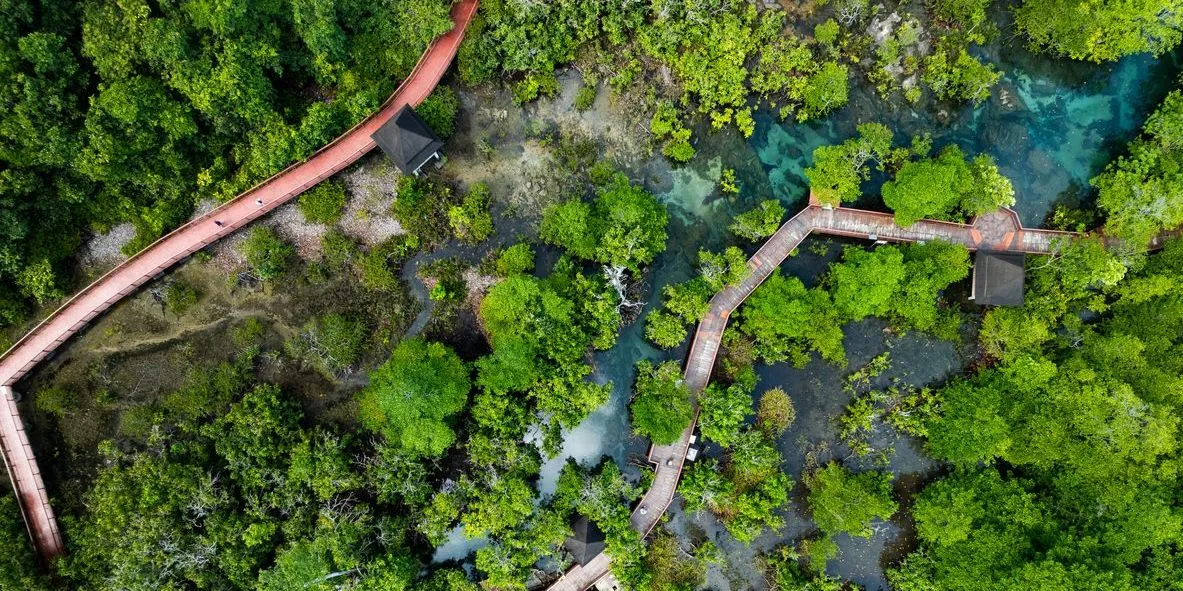
The risk, return, and resilience of mangroves as an asset to add value to the global economy
Mangrove protection and restoration has emerged as one of the most impactful nature-based solutions to the climate and biodiversity crises. However, for decades, these ecosystems have remained on the margins of global climate finance flows, despite their capacity to sequester carbon, reduce climate risks, protect coastal infrastructure, and sustain local economies such as fisheries and tourism.
Recent flooding and climate emergencies in countries like Colombia have made it evident that the loss of mangroves is not merely an environmental problem, but a factor that amplifies economic damage, fiscal pressure, and social vulnerability. It is in this context that the Mangrove Breakthrough arises. This global initiative is designed to transform how the world values, finances, and integrates mangroves into economic and investment decisions. Its financial goal is clear and ambitious: to mobilize USD 4 billion by 2030 to protect and restore 15 million hectares of mangroves globally, aligning public, private, and philanthropic capital under a framework of verifiable impact.
The Breakthrough does not operate as a traditional fund. Its vision is more structural, aiming to ensure that the true value of mangroves is systematically incorporated into public and private investment decisions.
“The main objective is now to see more commercial banks, asset managers and development financiers actively contributing to the initiative, with the ambition to see more mangrove-positive transactions happening", explains Ignace Beguin Billecocq, Executive Director of the Mangrove Breakthrough.
The Mangrove Breakthrough works to scale impact by mobilizing public, private, and philanthropic capital. National and subnational governments play a central role by aligning budgets, adaptation plans, and climate commitments—such as Nationally Determined Contributions (NDCs)—with mangrove projects. 48 governments, representing approximately 60% of the world's mangroves, have endorsed the initiative, sending a clear political signal of commitment to the markets and the financial sector.
Philanthropic capital plays a key catalytic role, helping to de-risk and structure projects at early stages, while the financial sector finds in the Mangrove Breakthrough a growing portfolio of opportunities aligned with ESG criteria, climate resilience, and nature-positive outcomes.
"When we speak with financial institutions, we speak their language: risk, return, and resilience. A mangrove reduces future disaster costs, protects existing assets, and can generate financial flows through blue carbon, insurance, sovereign debt, and results-based payment models. This is not philanthropy: it is smart natural capital management," notes Carlos E. Correa, Global Ambassador of the Mangrove Breakthrough.
One of the pillars of the system is the Mangrove Catalytic Facility (MCF), designed as a mechanism to create the necessary conditions for positive financial transactions for mangroves to develop. This instrument combines seed capital, technical assistance, and concessional financial tools—such as guarantees, debt, and equity—with the goal of improving project bankability and attracting larger-scale investments from development banks, climate funds, and emerging markets.
This approach has successfully positioned mangroves as critical natural infrastructure.
The initiative also promotes innovative financial instruments that link profitability with measurable environmental impact, such as mangrove-linked bonds, sustainability-linked loans based on climate performance, and insurance schemes that recognize their role as natural barriers against storms and flooding. These mechanisms allow sectors such as infrastructure, tourism, coastal agriculture, and aquaculture to integrate the value of mangroves into their investment decisions.
The use of data and science is another key enabler. Through mapping and monitoring platforms, the Mangrove Breakthrough provides geospatial information, clear indicators, and impact metrics that allow governments, banks, and investors to identify risks, opportunities, and returns associated with mangroves.
"Mangroves are critical infrastructure for your business. Without mangroves, your coastal investment portfolio is at a much higher risk. By integrating mangroves into decision-making processes in relevant geographies, you will build a more robust portfolio and will see new investment opportunities emerging," states Beguin.
Since 2020, over USD 750 million has already been mobilized toward mangrove-related projects, and it is expected that the implementation of the Mangrove Catalytic Facility in priority regions such as Southeast Asia and Latin America will significantly accelerate this pace. Countries like Indonesia, Brazil, and the Philippines have become reference cases due to their ability to connect political commitment, technical evidence, and financial opportunity.
"For many ministers of finance or planning, the data point that changes the conversation is that mangroves store up to four times more carbon per hectare than terrestrial tropical forests, and that their loss triggers immediate emissions. That turns mangroves into a fiscal risk… or a climate and economic opportunity," concludes Correa.
In a global scenario marked by the climate emergency, the Mangrove Breakthrough proposes a new paradigm by embedding nature into the heart of financial systems. Financing mangroves is not just an environmental cause, but a strategic decision to reduce risks, protect coastal economies, and build long-term resilience.
The Spanish version of this article can be accessed here.

.jpg)