New press release live from UNOC: Read here


.jpg)
Tropical coastlines are under growing pressure. More frequent storms, heavier rainfall, and rising flood risks are colliding with decades of environmental degradation. Across the tropics, more than three million hectares of intertidal zones lie damaged, once-thriving mangrove ecosystems now reduced to barren, eroding landscapes. Many of these areas were originally converted for aquaculture and managed by smallholder farmers, yet today they yield little income or have been abandoned altogether.
The loss of mangroves has far-reaching consequences. These ecosystems are critical for shoreline protection, biodiversity, and carbon sequestration. They also underpin blue food systems that sustain millions of people. Without them, coastal communities face increasing vulnerability to climate change and shrinking economic opportunities. At the same time, the seafood industry's shift toward intensive, feed-based aquaculture is pushing smallholder farmers into risky, high-cost systems that are often neither technically feasible nor economically viable in degraded environments. The result is a vicious cycle of ecological decline and financial hardship.
Recognizing both the ecological and economic urgency of this crisis, Blueyou has spent more than 15 years developing and implementing a scalable solution: SELVA Shrimp, Blueyou's program to promote innovative Integrated Mangrove Aquaculture (IMA) systems in degraded intertidal coastal zones.
Blueyou's restorative mangrove aquaculture program began in Vietnam as an early-stage research and development initiative. Over the past two decades, it has evolved into a proven, large-scale model now operating across Vietnam and Indonesia, covering approximately 18,000 hectares and involving around 3,600 smallholder farmers. These farms collectively produce about 15,000 metric tons of seafood annually.
This long-term field experience forms the backbone of Blueyou's global scaling strategy and positions the company as a pioneer in regenerative aquaforestry.
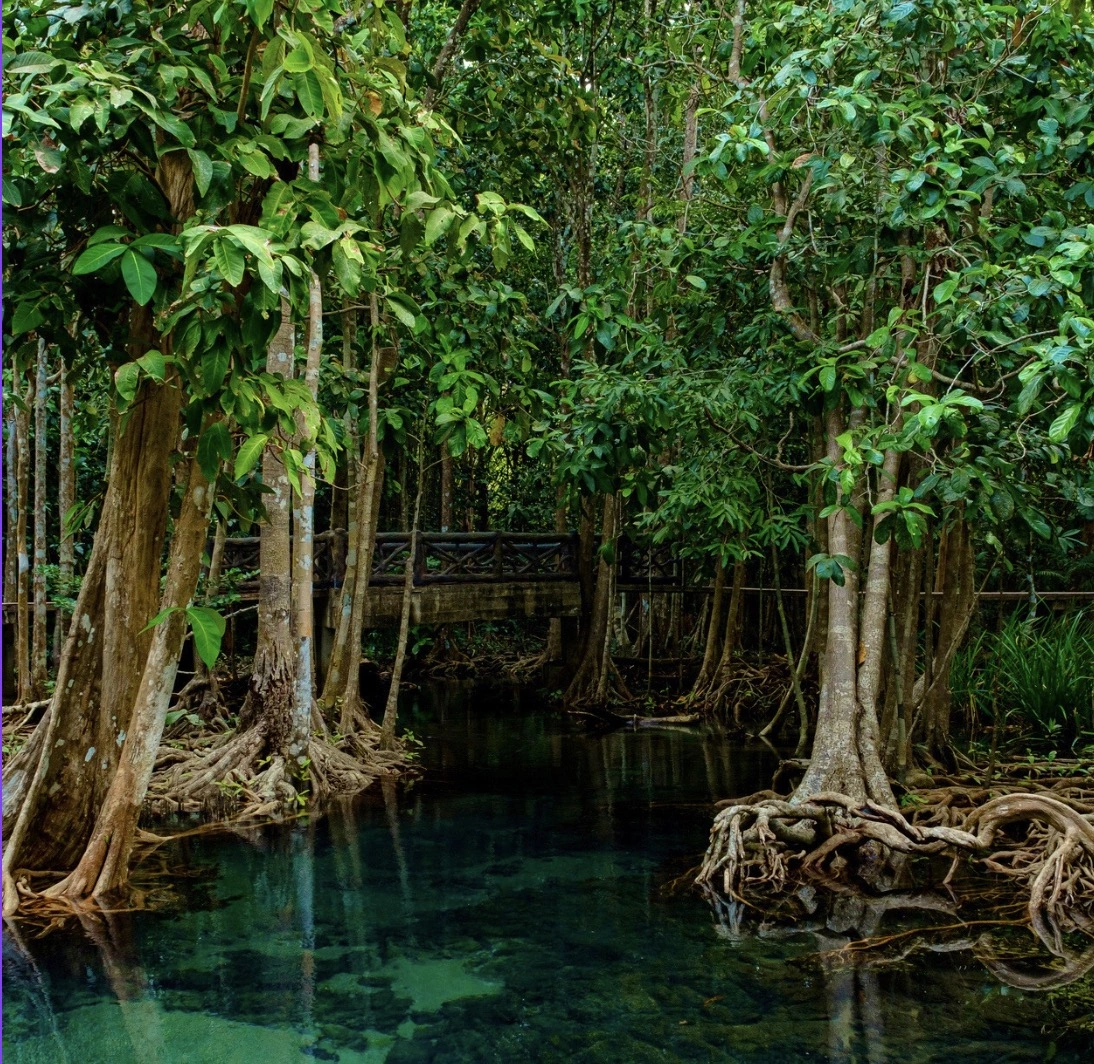
At the heart of Blueyou's IMA approach is a simple but transformative idea: restore mangroves directly on aquaculture farms and work with nature rather than against it.
Within three to four years, mangroves can cover more than half of a farming area. This restores natural food webs and habitat structure while creating ideal conditions for a diverse range of species, including shrimp, crabs, filter-feeding fish, and bivalves within a balanced polyculture system.
Unlike conventional aquaculture, Blueyou's model requires no external inputs such as feed, fertilizers, or chemicals. It is entirely powered by sunlight and naturally available nutrients. Mangroves provide both habitat and nourishment, aligning ecological restoration with economic incentives and turning farmers into active stewards of their ecosystems.
The results are compelling. Through improved pond design and best practices developed by Blueyou, farm productivity increases two- to threefold. At the same time, farmers avoid the high costs associated with industrial aquaculture inputs, significantly boosting net income.
This creates a viable and scalable alternative to intensive, feed-based aquaculture systems, which often push smallholders into financial risk, especially in already degraded environments.
Blueyou has also demonstrated market viability. Through its SELVA SHRIMP® brand, restoratively farmed seafood has entered food service and retail markets. In 2025 alone, 250 tons of certified restorative shrimp, around 10 percent of total program production, were commercialized.
By restoring mangroves while producing seafood, this model directly contributes to climate change mitigation and coastal resilience. To unlock large-scale impact, Blueyou has expanded its program in Northern Kalimantan, Indonesia, targeting 20,000 hectares. This initiative aims to deliver the first validated blue carbon project for Integrated Mangrove Aquaculture.
At the same time, Blueyou continues to strengthen the scientific evidence base through robust frameworks and data collection systems that quantify the impacts of IMA on carbon sequestration, biodiversity, and socio-economic outcomes. This is essential for building investor confidence and accelerating global adoption.
A key component of this effort is the development of an open-source blueprint based on Blueyou's 20 years of experience. The blueprint encompasses practical farm design guidelines, polyculture system models, the integration of blue carbon financing, and best-practice manuals for smallholder farmers. By making this toolbox publicly available, Blueyou enables conservation organizations, blue carbon developers, and private sector actors to replicate and scale IMA globally, far beyond the company's own operational footprint.
Historically, mangrove restoration has relied heavily on public and philanthropic funding, limiting scalability. Blueyou's model introduces a new pathway through high-integrity blue carbon financing. By generating verified carbon credits from restored mangrove systems, IMA projects can attract private investment and establish sustainable, long-term funding streams.
This approach closely aligns with the Mangrove Breakthrough's vision of mobilizing large-scale public and private finance to protect and restore 15 million hectares of mangroves by 2030. Degraded coastal aquaculture landscapes represent one of the greatest opportunities to achieve this ambition, with an estimated one million hectares offering significant restoration potential. Blueyou's IMA model demonstrates how these degraded areas can be partially reforested while simultaneously improving the productivity and livelihoods of smallholder farmers.
The overarching goal of the SELVA Shrimp program is to develop a blueprint that enables large-scale investment to be channelled into Integrated Mangrove Aquaculture (IMA) systems, financing their expansion across up to one million hectares. By creating a scalable and investable model for IMA, the program has the potential to make a significant contribution to the Mangrove Breakthrough's ambition of restoring mangroves at scale while transforming the mangrove finance landscape.
The long-term vision is ambitious: restoring more than one million hectares of degraded intertidal zones and building a global network of thriving, community-based mangrove aquaculture systems.
Photo Credit: Blueyou