New press release live from UNOC: Read here


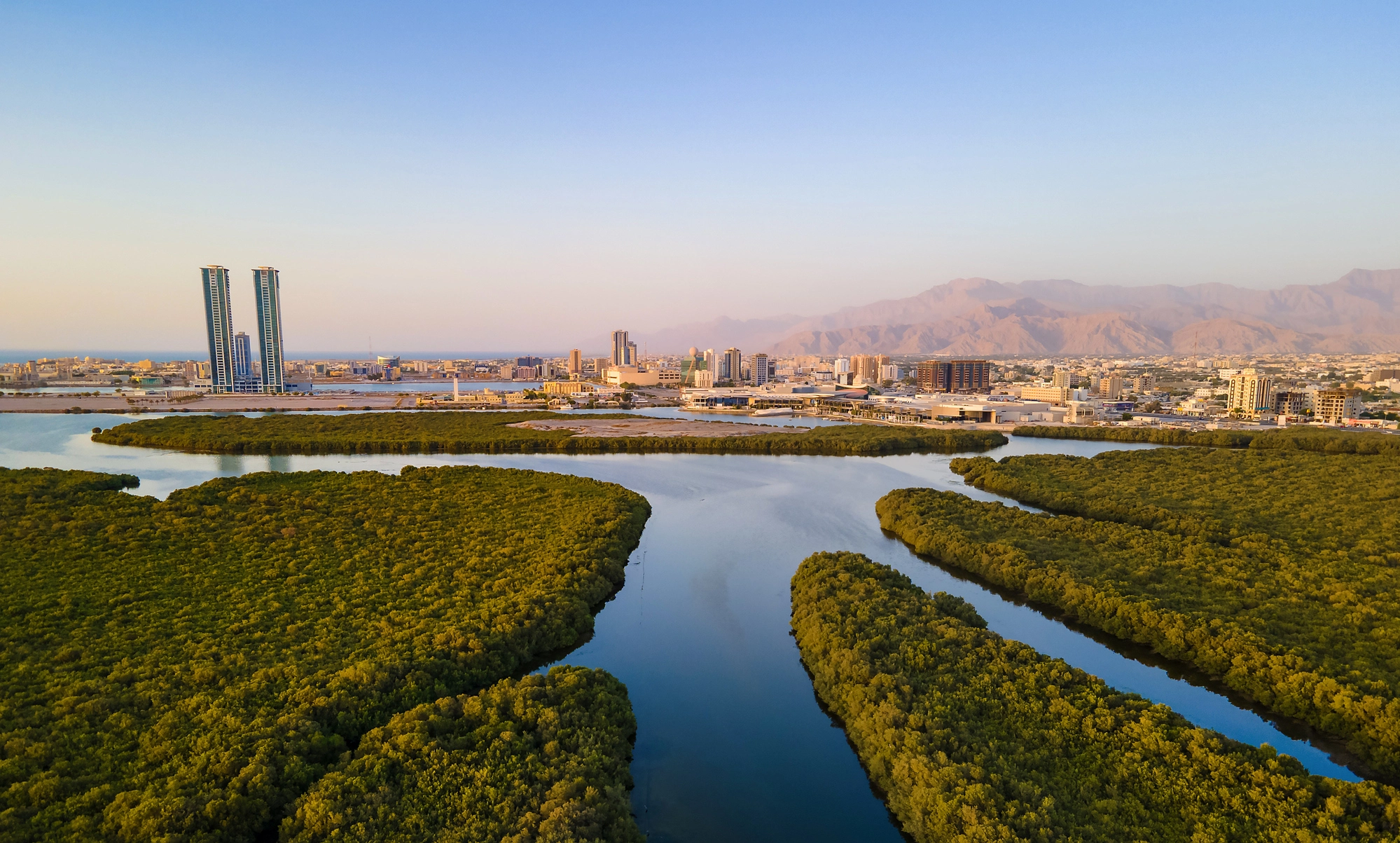
The Mangrove Breakthrough (MB) has launched its newest report, From Collective Ambition to Tangible Achievements: Mangrove Breakthrough Financial Roadmap Progress Assessment. The report assesses the collective progress since the MB Financial Roadmap was published in 2023, and its central finding is clear: the case for investing in mangroves is no longer theoretical.
To date, the MB has tracked more than 40 large operations, each over USD 1 million, that have mobilized nearly USD 1 billion in mangrove-positive investment since 2020, and the landscape continues to expand. A global pipeline of mangrove-positive investments is taking shape, deals are closing at an increasing rate, public-sector support is growing, and financial institutions and corporates are beginning to integrate mangroves into their decision-making.
Read on to learn about the key areas of progress since 2023.
The MB was launched at COP27 by the Global Mangrove Alliance (GMA) and the Climate High-Level Champions to catalyze collective action to redefine how mangroves are valued, financed, and protected. Its goal is to drive systemic change that will mobilize USD 4 billion to protect and restore 15 million hectares of mangroves by 2030.
Rather than financing projects directly, the MB focuses on creating the conditions for mangrove-positive transactions to take place. As these transactions are replicated and public and private investors begin to embed mangrove KPIs into their investment decisions, the market receives the signals needed to shift its operations. The more such transactions occur, the closer we all are to the 2030 goals.
At its heart, the MB is a collective movement backed by 50 governments, 48 financial institutions and corporates, and more than 100 developers and NGOs committed to its goals and the Roadmap's vision.
"Even in a challenging geopolitical climate, the MB demonstrates the power of multi-stakeholder cooperation. By bringing diverse actors together around a common ambition, this collective movement is strengthening partnerships and building the momentum needed to protect and restore mangrove ecosystems and advance progress toward its goals," says Monica Medina, former Assistant Secretary of State for Oceans, International Environmental and Scientific Affairs at the US State Department.
Mangrove value is rarely factored into how financial institutions assess risk and opportunity. The MB's investment narrative connects that value to asset classes and revenue streams. It engages coastal sectors and financial institutions through a mangrove-adjacent business approach that spans food production, infrastructure, community-led projects, and carbon.
Working with the GMA, corporates, and local and global financial institutions, the MB created a mangrove-positive framework that sets common definitions for concepts such as "mangrove-positive" and "mangrove-positive business models." This gives investors, financial institutions, governments, and businesses shared definitions and the understanding they need to engage in an otherwise fragmented market.
These definitions now underpin the MB's mangrove-positive lending guidance and its Transaction Accelerators in Brazil, Mexico, Indonesia and the Philippines. The four countries were selected for their significant mangrove extent, strong public policy commitment to mangrove conservation and restoration, active networks of local partners and communities, and potential to mobilize public and private finance for mangrove-positive activities. The Accelerators source and assess a pipeline of mangrove-positive projects, strengthen the investment readiness of selected projects, and work with banks, investors, and other financial institutions to identify concrete financing opportunities.
With Restor and Capital for Climate, the MB developed the Mangrove Projects Portfolio to give visibility to an investable pipeline of mangrove-positive projects and strengthen the data needed to identify, assess, and advance projects toward investment readiness. The Portfolio maps philanthropic and investable opportunities across 300+ project sites in almost 50 countries, covering more than 500,000 hectares of mangrove ecosystems.
The pipeline runs in two streams: coastal businesses – from infrastructure to coastal agriculture, fisheries and aquaculture – and an emerging mangrove economy that includes carbon markets.
Fifty national and subnational governments have endorsed the MB, and 19 have referenced mangroves in their Nationally Determined Contributions (NDCs), 17 of them with mangrove-specific targets. Some endorsing countries, such as Costa Rica, Sierra Leone, Indonesia, Jamaica, Pakistan and Colombia, also include clear mangrove targets in their National Biodiversity Strategy and Action Plans (NBSAPs).
These are clear political signals to increase investment in mangrove protection and restoration. The Mangrove Alliance for Climate has also been essential in driving political engagement, and national regulations continue to be deployed in many countries, reflecting the Roadmap's emphasis on the pivotal role of governments in creating an enabling investment environment.
The Roadmap proposed a Global Fund for Mangroves to mobilize public, philanthropic and private capital for mangrove-positive finance. The aim stays the same but the design has changed. After consulting investors and partners, the MB chose a facility focused on transactions rather than a pooled investment fund, so that capital can be deployed with local banks and development finance institutions, according to each project's needs.
The Mangrove Catalytic Facility (MCF) is the MB’s transactional component. It works with businesses and projects that are advanced enough to talk to financiers but still face specific barriers to capital. The MCF helps establish whether a deal can be financed, connects opportunities with lenders and investors, supports structuring and, where a barrier is identified, mobilizes a matching catalytic instrument, such as technical assistance grants, first-loss capital, guarantees, concessional loans or blended structures.
Because land tenure, coastal management and financing conditions differ across countries, each transaction is tailored to local conditions, alongside, not instead of, local banks and development finance institutions.
Thanks to the engagement of a diverse range of actors, the building blocks are coming into place: an expanded investment thesis, a shared language, a visible pipeline, growing government support and a facility designed to help deals close. Together, they aim to deliver mangrove-positive transactions at scale, with finance reaching the businesses and projects that protect and restore mangroves.
This momentum is encouraging, and investment must accelerate further to meet the 2030 targets.
Read the full report here.