New press release live from UNOC: Read here


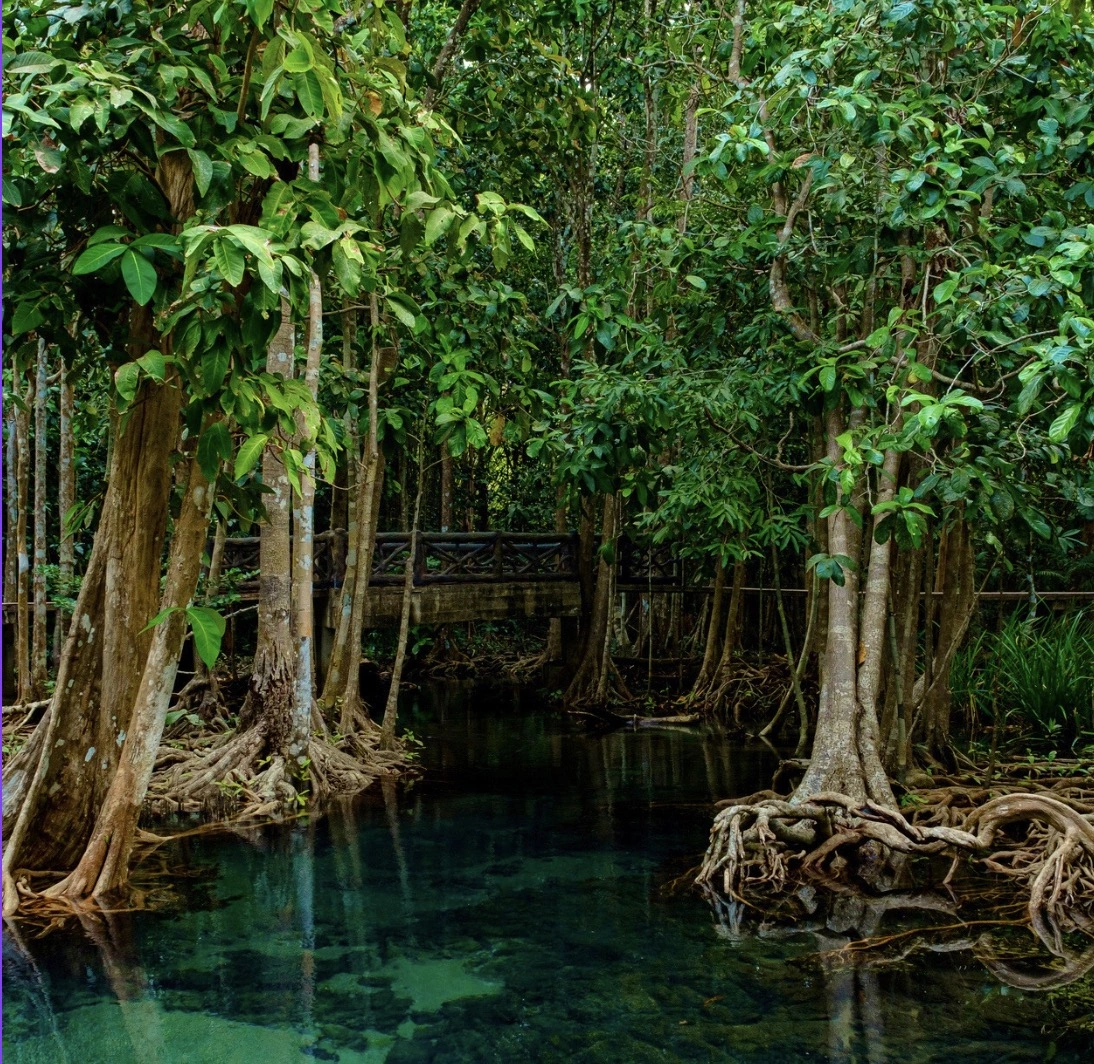
A study published in Science in early June offers some much-needed good news for mangrove ecosystems. It found that global mangrove extent has shifted from net loss to near net gain over the past decade, driven by unexpected expansion and regrowth. These findings are mirrored by the updated geographical data on the Global Mangrove Watch platform (GMW Version 4.0) released on World Mangrove Day, 26 July 2026, and offer a consistent picture of the current trajectory of the world's mangroves.
Yet, these encouraging trends are not a reason for complacency. Instead, the findings provide a new foundation for understanding and predicting mangrove dynamics, advancing ecosystem conservation and restoration goals, and strengthening climate mitigation and adaptation strategies through blue carbon initiatives.
That is why the Mangrove Breakthrough is working with partners to transform how mangroves are valued, protected, and financed. By mobilizing the finance needed to protect and restore 15 million hectares of mangroves by 2030, we will build a more resilient future for mangrove ecosystems and the communities and economies that depend on them.
In contrast to previous global assessments, the study finds that mangrove loss rates declined significantly between the 1980s and 2023, with mangrove gains increasing substantially over this period. All regions, except Southeast Asia and Africa, demonstrated long-term net gains in mangrove areas, with the primary driver of this shift being seaward expansion.
"We are moving in the right direction because you can see a very clear trend of decreased loss rate," said Dr. Zhen Zhang, the lead author of the study, speaking to BBC News.
The authors conclude that mangroves, despite mounting pressures from human activity and climate change, may be more resilient and better able to maintain their extent than previously recognized. This is critical since 50 percent of mangrove ecosystems are at risk of collapse in the coming decades.
This progress builds on decades of work by local communities, governments, NGOs and scientists, alongside policies that have increasingly prioritized mangrove conservation and restoration.
The growing recovery of mangroves is being driven by a shift in political will. The authors point to government-led restoration initiatives that are already showing promising results, including Indonesia’s National Mangrove Management Strategy and China’s Special Action Plan for Mangrove Conservation and Restoration.
More recently, initiatives like the Mangrove Breakthrough have accelerated political commitments. Governments around the world are increasingly recognizing mangroves as nature-based solutions, critical for climate mitigation and adaptation, biodiversity, and community well-being. To date, 49 national and subnational governments have endorsed the Mangrove Breakthrough, representing countries and jurisdictions that collectively contain more than 60% of the world’s mangrove extent.
Importantly, many of these commitments are being reflected in national climate policy. Of the 22 national governments that have endorsed the Mangrove Breakthrough, 15 have incorporated mangrove targets or references into their Nationally Determined Contributions (NDCs): Brazil, Colombia, Costa Rica, Cuba, Dominican Republic, Ecuador, Indonesia, Jamaica, Liberia, Mexico, Pakistan, Palau, Panama, Sierra Leone, and the United Arab Emirates.
Similarly, investments for mangrove conservation and restoration are increasing. The Mangrove Breakthrough has tracked more than 40 large transactions (over USD 1 million) that have mobilized over USD 750 million in mangrove-positive investments since 2020, and Capital for Climate
When science informs decision-making, effective policies emerge and investment flows.
The study underscores the importance of data-driven platforms like the Global Mangrove Watch (GMW) and the Mangrove Restoration Tracker Tool. To support their analysis, the researchers developed a novel global mangrove cover dataset, to 30-meter-resolution to assess how mangrove occurrence and canopy cover have changed from the early- to mid-1980s through 2023, including an assessment of both mangrove loss and gain, as well as canopy dynamics detecting degradation (canopy thinning) and growth (canopy accumulation). As the authors noted in a Global Mangrove Alliance blog post, the dataset serves two key purposes:
“Firstly, it shows annual change in mangrove area, to monitor broad changes in extent driven by deforestation and loss, or regeneration and expansion of mangroves into new locations. Secondly, it shows us more subtle changes in canopy cover within the persistent mangrove area, which helps us to decode areas of degradation or canopy thickening.”
By capturing both large-scale changes in mangrove extent and more nuanced shifts in ecosystem condition, the dataset provides a powerful tool for monitoring progress, identifying emerging threats, and informing on effective conservation and restoration strategies.
While the mangrove monitoring data demonstrates that the tide is beginning to turn for mangroves, progress must accelerate if we are to meet the goals set by the Mangrove Breakthrough and the Global Mangrove Alliance. The authors make clear that natural regeneration alone will not be enough. Achieving ambitious targets will require a fundamental shift in how we value, protect, and finance mangrove ecosystems. Mobilizing capital at the scale and speed necessary to protect existing old-growth and newly grown mangrove forests and restore those that have been lost, while upholding the rights of local communities, is our challenge.
Furthermore, the success of mangrove restoration depends strongly on the techniques used to restore the physical conditions that mangroves need and on the stewardship by local communities. Here's what to look out for in restoring resilient, biodiverse mangrove ecosystems.
Mangroves are natural ecosystems that protect coastlines, support livelihoods, strengthen biodiversity, and underpin local economies. While investor interest in nature-based solutions continues to grow, investments in mangroves have been limited relative to the need.
The challenge is not a lack of capital or interest but is due to limited enabling mechanisms. Financial institutions often lack shared valuation frameworks, common risk definitions, and access to a transparent pipeline of investment-ready opportunities. As a result, capital remains concentrated at the top of the system, while coastal communities and local economies continue to face barriers to accessing the investment needed for project planning and enhancing mangrove-positive management.
Yet the investment case for mangroves is compelling. Mangroves are among the most cost-effective solutions for delivering simultaneous benefits for climate mitigation, resilience, biodiversity, and livelihoods. A single hectare can generate up to USD 37,500 annually in fisheries benefits and support the economic well-being of coastal communities.
Working with financial institutions, governments, scientists, NGOs, and local communities, the Mangrove Breakthrough is building the enabling conditions needed to accelerate action that continues the positive trend observed in the study by Zhang et al. and GMW 4.0.
The Mangrove Breakthrough seeks to close the finance gap for mangrove conservation and restoration. The Breakthrough and Restor have already mapped over 300 investable opportunities worldwide. Each project undergoes a triage process that matches it with the most appropriate source of capital: philanthropic and grant funding for early-stage initiatives, risk capital for projects with emerging revenue models, and commercial finance for projects ready to scale.
Working with local partners, the Mangrove Breakthrough aims to mobilize domestic public and private capital toward mangrove-positive businesses: economic activities that sustainably derive value from, depend on, and/or benefit from mangrove ecosystems, and that channel finance and/or business practices toward their conservation, restoration, and/or address underlying threats to the ecosystem. These businesses include, for instance, coastal agriculture and aquaculture, blue carbon projects, and coastal infrastructures (ports, energy systems, roads…). The Mangrove Breakthrough leverages proven financial instruments, including venture capital, bonds, equity, carbon markets, microfinance, and investment policies, to unlock capital at scale. By integrating mangrove-related KPIs in these transactions, coastal activities will be incentivized to transition away from activities degrading mangroves.
Meeting global mangrove conservation and restoration goals requires unprecedented collaboration, but the opportunity is clear: with the right partnerships, strong science and financing mechanisms in place, mangroves can become one of the defining climate and development success stories of this decade.
Zhen Zhang et al., Unexpected expansion and regrowth in Earth’s mangrove forests over the past four decades. Science 392,1082-1087 (2026). DOI: 10.1126/science.aec9773
Catherine Lovelock is Professor at the School of Environment, The University of Queensland. She is also a member of the Mangrove Breakthrough Council. Thomas A. Worthington is Head of Global Coastal Wetlands at the Department of Plant Sciences, University of Cambridge, and is co-author of the study.
.jpg)