New press release live from UNOC: Read here


.jpg)
The Government of Honduras became the 50th government to endorse the Mangrove Breakthrough today, marking a major milestone for the initiative. Honduras joins Brazil, Colombia, Costa Rica, Cuba, the Dominican Republic, Ecuador, Jamaica, Mexico, and Panama as part of a growing coalition of countries across Latin America and the Caribbean supporting the initiative. Endorsing governments represent countries that are home to more than 60% of the world’s mangrove extent.
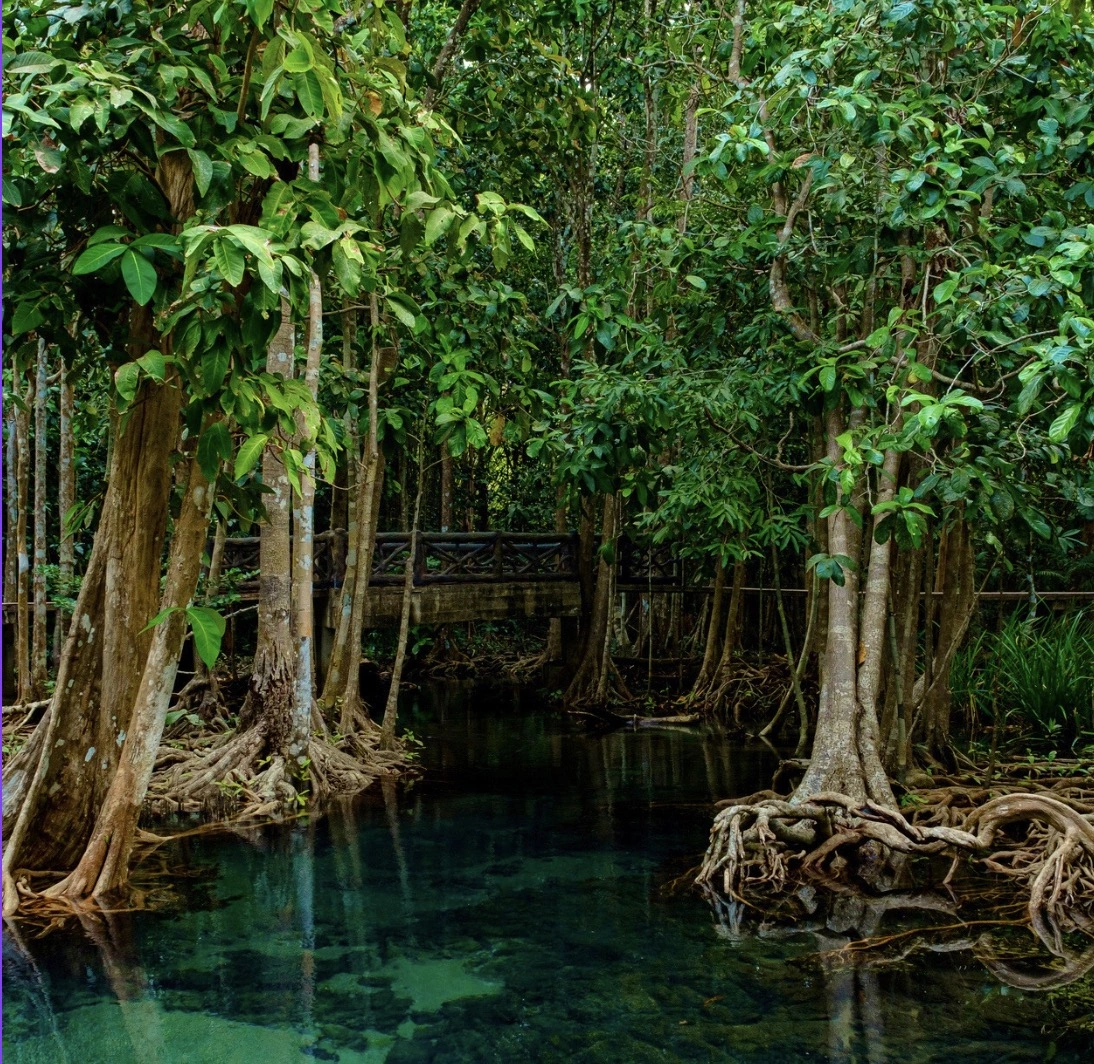
Mangrove forests cover more than 60,000 hectares across Honduras’s coastal and island areas, representing the second-largest mangrove extent in Central America after Panama. In Honduras, mangroves support community livelihoods, buffer shorelines from storm impacts, and serve as nursery habitats for economically important species.
Since the summer of 2023, Honduran NGO Centro de Estudios Marinos (CEM) has partnered with The Pew Charitable Trusts (Pew) to provide technical support to the Government of Honduras in the development of strong national goals for mangroves in the country’s revised national climate targets, known as Nationally Determined Contributions (NDCs).
“Honduras’ endorsement sends a strong signal to the world that mangroves are no longer on the periphery of nature and climate action,” says Mangrove Breakthrough Global Ambassador and Colombia’s former Minister of the Environment, Carlos Eduardo Correa Escaf. “With 50 governments on board, it is clear that the political will exists to unlock the capital needed to mobilize investment at the scale and speed required to achieve the ambitious goal of protecting and restoring 15 million hectares of mangroves by 2030.”
The government’s most recent NDC, submitted to the UNFCCC in January 2026, specifies actions for marine and coastal wetland conservation for the first time. The country committed, by 2035, to:
Honduras’ endorsement of the Mangrove Breakthrough reflects the country’s growing focus on the important role that mangroves play in the country. Over the last several years, the Government of Honduras has taken other steps to formalize national-level commitments recognizing the importance of mangroves. In addition to including science-based targets for mangrove action within the country’s revised NDC, the Government of Honduras in 2023 launched its first National Position on Oceans, and reactivated two major national governance bodies for biological monitoring and coastal wetland management. These efforts were supported by Pew’s partnership with CEM to improve the inter-institutional arrangements and data governance that informed the commitments made in the recent NDC.
Honduras’s National Institute for Forest Conservation (Instituto Nacional de Conservación Forestal, or ICF) is responsible for implementing the three mangrove-related targets in Honduras’s updated NDC and has championed efforts for the government to endorse the Mangrove Breakthrough at a national level.
“There was a great opportunity to highlight the key role of our mangroves through the NDC process”, said Giselle Hernández Castellanos, External Cooperation Coordinator at ICF’s Office of Project Coordination. “With new targets in the NDC 3.0 and this endorsement of the Mangrove Breakthrough, Honduras intends to measure and better protect ecosystems which we know are essential for coastal economies.”
As the 50th nation to endorse the Mangrove Breakthrough, Honduras further reinforces its national efforts to protect and restore mangroves while connecting them to a global platform for collaboration, knowledge exchange, and mobilizing finance to accelerate implementation.
“We are excited to see Honduras taking crucial steps on the international stage by outlining ambition for mangrove conservation and restoration over the next decade”, said Kate Meyer, who leads The Pew Charitable Trusts’ effort to conserve coastal wetlands in Honduras. “Pew has worked closely with in-country and regional partners to connect national science baselines with climate policy in the development of NDC targets. The Mangrove Breakthrough endorsement further signals Honduras’ commitment to centering coastal wetland ecosystems, like mangroves, in ongoing conservation efforts.”
The Mangrove Breakthrough is pioneering how we, as a global network, protect nature to build resilient communities. It is a global movement to value, finance, and safeguard mangroves. The ambition is to mobilize USD 4 billion to protect and restore 15 million hectares of mangroves by 2030, fostering radical collaboration, advancing science-based financial and regulatory decisions, and investing in local leadership.
The Breakthrough’s Secretariat (“the Hub”) drives this mission by sustaining multistakeholder partnerships and building the infrastructure for lasting impact. The Hub is legally hosted at the Chilean NGO Ambition Loop.
Photo Credit: Kate Meyer, The Pew Charitable Trusts