New press release live from UNOC: Read here


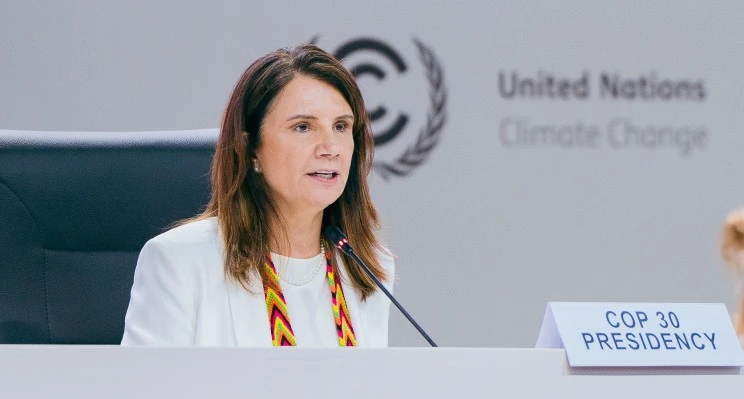
Hosted in a region where the Amazon rainforest meets the Atlantic Ocean, COP30 Brazil put mangrove forests—and the way they are protected, financed, and valued—fully in the spotlight. The Brazilian government, which endorsed The Mangrove Breakthrough in June and is home to the world’s second-largest mangrove cover, made it clear that these historically underappreciated and undervalued ecosystems can no longer be overlooked.
Over the two weeks of COP30, we witnessed a number of decisions that are building the momentum to mobilize finance for nature-based solutions at an unprecedented scale and speed. The USD 6.7 billion pledged to the Tropical Forests Forever Facility (TFFF), the proposal for a "roadmap" by the COP Presidency to reverse deforestation, and strong mangrove-positive NDC targets announced by Costa Rica, Mexico, and other countries have sent a strong signal that mangrove-positive action is growing.
COP30 was truly a seminal moment for the Mangrove Breakthrough. At our High-Level event, we introduced the Mangrove Catalytic Facility (MCF) and announced USD 750 million in mangrove-positive investments mobilized since 2020. With the incredible support of our partners at Rare Brasil and Conservação Internacional (CI-Brasil), we secured key endorsements from the Commission for Strengthening Marine Extractive Reserves and Coastal Marine Traditional Peoples (CONFREM), as well as the Brazilian states of Amapá, Bahia, and Maranhão. Working with the Federal Government, local leaders, NGOs and Brazilian financial institutions, we will be driving further action and investments in the country in 2026.
With the outcomes of Belem, we are entering a new phase, focusing on scale and delivery. As we approach the halfway point between the Mangrove Breakthrough’s launch at COP27 and our 2030 targets, we are actively building the financial architecture needed to reach our USD 4 billion goal and fortifying the partnership.
In 2025, the Mangrove Breakthrough continued to strengthen and mature. In 2026, we are ready to act bigger and push our collective journey to the next scale.
Ignace Beguin Billecocq, Executive Director, The Mangrove Breakthrough
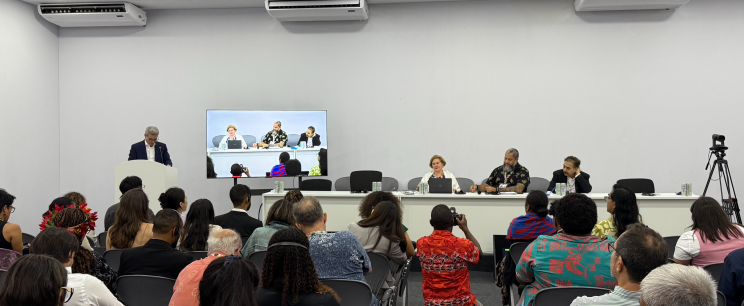
The Mangrove Breakthrough hosted its flagship High-Level Event at COP30, organized by The Nature Conservancy, Rare, The Pew Charitable Trusts, and the Government of Papua New Guinea. This event highlighted leaders across governments, businesses, and civil society who are placing mangroves at the heart of their actions to build resilient communities and economies. The event also marked a significant step for the Breakthrough’s progress in deploying the instruments necessary to scale up mangrove-positive investments with the launch of the Mangrove Catalytic Facility (MCF). The Breakthrough announced it has tracked more than 40 large operations (over USD 1 million) that have mobilized over USD 750 million in mangrove-positive investments since 2020, working toward the goal of mobilizing USD 4 billion to protect and restore 15 million hectares of mangroves by 2030.
Learn more about the MCF and the Breakthrough’s progress here.
Our team has put together an extensive recap document of the significant advances made for mangrove ecosystems throughout COP30. Ocean and forests were present more than ever at COP, which led to mangroves being recognized as essential players in the face of climate change through awards, events, new NDCs, reports and publications.
View the full rundown of Mangroves at COP30 here.
The Mangrove Breakthrough secured several key endorsements from Brazilian state and city governments during the COP30 Local Leaders Forum, co-hosted by the COP30 Presidency and Bloomberg Philanthropies, which generated serious momentum in the days leading up to Belém. The endorsements from the states of Amapá, Pará, and Maranhão, safeguard the largest contiguous mangrove area in Brazil, containing 80% of the country’s mangroves, marking a major demonstration of political will and leadership in mangrove conservation and restoration.
“This group of leaders shares a common commitment to place mangroves at the heart of global and local climate action,” said Monique Galvão, Vice President of Rare Brazil. “Their future depends on the people who live with and care for them every day—the true guardians of the mangroves—and on our collective ability to value, protect, and restore these vital ecosystems for a resilient future.”
Learn more about how local and state governments are driving the Breakthrough’s work here.
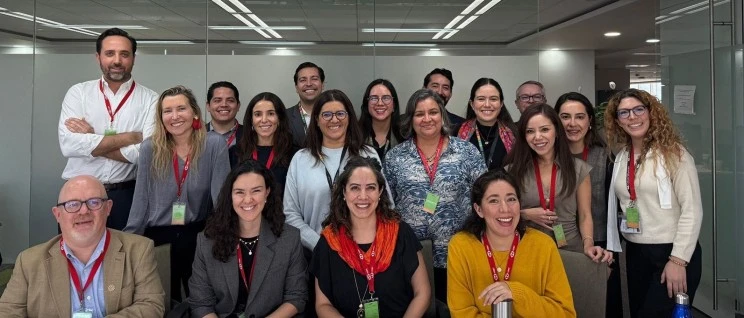
Over the past six months, the Mangrove Breakthrough has been on a global investor roadshow to engage with key stakeholders across New York, London, Bogotá, Cali, Mexico City, Singapore, and Manila to accelerate mangrove-positive investments and build the financial architecture needed to unlock large-scale investment for mangrove ecosystems and the communities and businesses that depend on them.
From financial roundtables to mangrove-positive finance workshops, we mobilized partners on:
From these meetings, we found partners all over the world who are actively stepping up to invest in nature-based solutions, blue carbon, and coastal resilience — from the philanthropic and financial sectors to governments and civil society.
Check out our press release in English and Spanish from the Bogota roundtable.
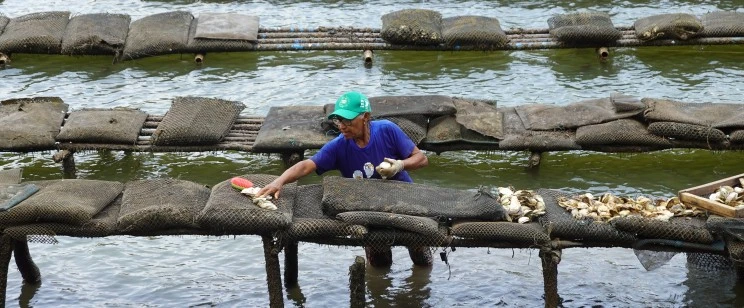
On Marajó Island, in the state of Pará, Brazil, the community associations ACCS and ASSUREMAS are leading the development of a nature-positive, community-managed crab processing and distribution cooperative within the Marine Extractive Reserve (RESEX) — a federally protected area spanning over 7,400 hectares of mangroves. As a member of the Global Mangrove Alliance, Rare is supporting these local organizations in strengthening governance, market access, and sustainable management practices.
Casa do Ucides, named after the mangrove crab (Ucides cordatus), is building a sustainable value chain for one of the Amazon Coast’s most emblematic species. With support from Rare and in collaboration with local partners, the initiative has already mobilized over 100 crab extractivists for training. Participation in the cooperative is contingent on sustainable harvesting practices, embedding mangrove conservation directly within the local economy.
Climate Heroes: Mangroves Are Powerful Nature-Based Solutions Op-Ed by Ignace Beguin Billecocq and Tim Christophersen, Vice President of Climate Action at Salesforce. This piece outlines the importance of mangrove ecosystems for coastal communities and the steps being taken to increase their value on the global climate agenda.
The Mangrove Breakthrough is Scaling Up—with Quality at the Core Op-Ed by Mark Beeston of Conservation International. The Mangrove Breakthrough is officially adopting the High-Quality Blue Carbon Practitioners Guide and Progress Wheel to ensure high-level standards and quality across its global project portfolio, where people and nature are deeply intertwined. This marks a key step toward scaling up—with integrity and impact at the core.
O Globo Article (Portuguese): Manguezal também é floresta: país faz mapeamento desses ecossistemas para financiar proteção. Article in O Globo (Brazil). This article highlights how the Brazilian government is taking steps to map national mangrove ecosystems to facilitate financing their protection.
Global Pact to Protect Mangroves Gains Support from 46 Governments (In Portuguese) Article in Um Só Planeta (Brazil). This feature article on the Mangrove Breakthrough includes interviews with Ignace Beguin and Monique Galvão.
Regional Readiness Reports: During New York Climate Week, the Global Mangrove Alliance published three Regional Readiness Reports that offer clear regional pathways for accelerating actions toward the Mangrove Breakthrough. These publications are guiding funders, governments, and partners in Asia, the Americas and West Africa.
“They point funders and decision-makers to the opportunities and to places and partners ready to move on making transformative impacts,” said Irene Kingma of Wetlands International.
Explore the reports here.
Blue Carbon Cost Tool (BCCT): Financing Our Blue Carbon Future. The Nature Conservancy and partners have released the BCCT, allowing stakeholders interested in the blue carbon market to understand where conservation and restoration are needed, along with the cost and potential carbon revenue. It’s a great tool that aligns with MB’s goals of facilitating investments in nature. Check out the recent webinar on the BCCT.
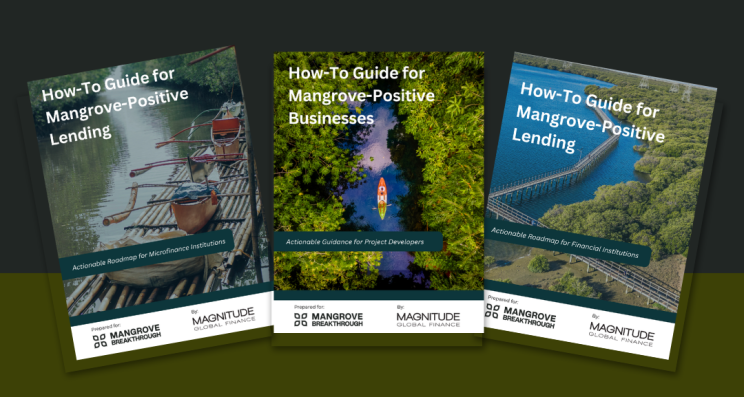
Mangrove Finance Handbooks. The Mangrove Breakthrough released a new series of how-to guides with Magnitude Global Finance which offers financial institutions, microfinance organizations, and project developers a clear, practical overview of the lending landscape for mangrove-positive and mangrove-adjacent businesses. The handbooks build on months of work and insights gathered from workshops in Colombia, the Philippines, and Senegal with Mangrove-Positive Lending Case Studies. Explore the handbooks here.
Outcomes: COP30 Elevated Actions for Mangroves. Our team has put together an extensive recap document of the significant advances made for mangrove ecosystems throughout COP30. Ocean and forests were present more than ever at COP, which led to mangroves being recognized as essential players in the face of climate change through awards, events, new NDCs, reports and publications. Find the full document here.
Webinar: Post COP30: What did it mean for coastal and marine ecosystems? Fair Carbon brought together two leading voices shaping the ocean agenda to reflect on what COP30 delivered for coastal and marine ecosystems: Anelise Zimmer from The Pew Charitable Trusts and Chip Cunliffe from the Ocean Risk and Resilience Action Alliance. Check out the webinar recording.
Coastal Resilience Methodology. Coastal areas are home to nearly 40% of the global population, many of whom face growing risks from storm surges and sea-level rise. Mangroves and tidal marshes offer powerful nature-based protection, absorbing wave energy and reducing flood impacts, often more cost-effectively than grey infrastructure like seawalls and levees. To help countries quantify these resilience benefits and unlock new forms of climate finance beyond carbon, The Nature Conservancy and global partners are developing the Coastal Resilience Methodology (SDVISta), a landmark protocol for valuing coastal protection services. Read the methodology here.
-
Thank you for reading 🌿
Follow us on LinkedIn and Instagram
mangroves@ambitionloop.earth
.jpg)